


AirPods 5 vs. AirPods 4: What’s New and What’s Changed?
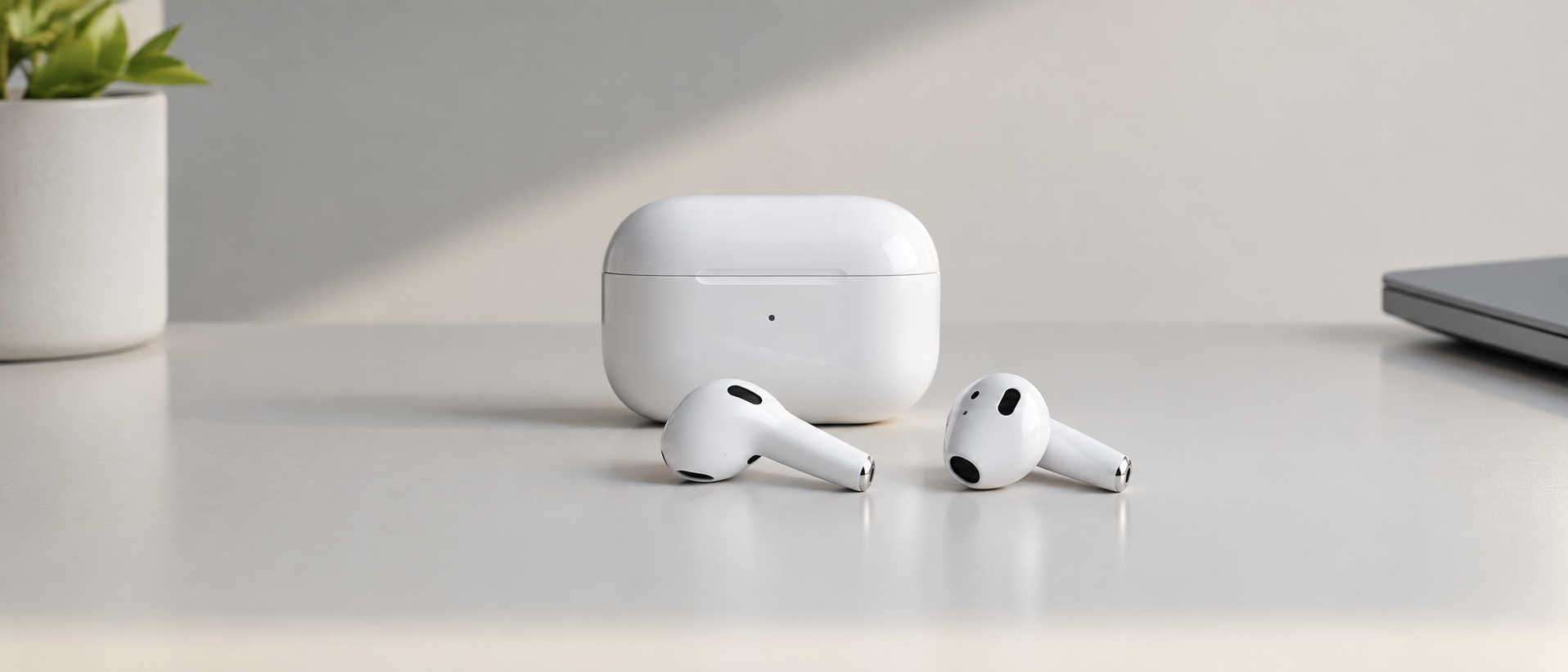
At first glance, it can be difficult to tell the AirPods 5 apart from the previous generation of AirPods. Apple has retained the familiar design, compact size, and overall shape, with the main changes taking place inside the earbuds. With the new generation, the focus is on the audio system, active noise cancellation, durability, controls, and several new software features.
At the same time, not all of the AirPods 5 features are entirely new. Some of them were already available on certain versions of the AirPods 4. Below, we compare AirPods 5 and AirPods 4, highlighting the key differences in design, sound, noise cancellation, battery life, and new features. What has actually changed, and are these differences noticeable in everyday use?
AirPods 5 vs. AirPods 4: What’s the Main Difference?
Apple introduced the AirPods 4 in two versions: the standard model and a version with Active Noise Cancellation (ANC). The standard AirPods 4 did not include Active Noise Cancellation, Transparency mode, Adaptive Audio, or Conversation Awareness, which automatically adjusts the audio during conversations. With AirPods 5, these features are available on both versions. In other words, the standard AirPods 5 is closer in terms of features to the AirPods 4 with ANC.
There is also a difference in noise cancellation performance. According to Apple, AirPods 5 can reduce external noise almost 50% more effectively than the AirPods 4 with ANC. This difference can be particularly useful on public transportation, in the office, on the street, or in other noisy environments.
Another important change is durability. While the AirPods 4 have an IP54 rating, AirPods 5 feature an IP57 rating, providing a higher level of protection against water exposure.
There is no significant change in size. Each AirPods 5 earbud measures 30.2 × 18.3 × 18.1 mm and weighs 4.3 grams. The H2 chip has also been retained.
Overall, Apple has not tried to completely redesign the familiar AirPods formula with the new generation. Instead, the company has refined the components that have a direct impact on the everyday user experience.
Design: Almost the Same AirPods on the Outside
The exterior design of AirPods 5 has not undergone any major changes. Like AirPods 4, the new model features an open-ear design without the silicone ear tips found on the AirPods Pro lineup.
This means Apple has retained a design intended for users who prefer a lighter, more open feel when wearing earbuds.
Each earbud measures 30.2 × 18.3 × 18.1 mm and weighs 4.3 grams. So, if you already use AirPods 4, you are unlikely to notice any dramatic change in appearance or size when switching to the new generation. The main differences become apparent once you connect the earbuds and start using them.
New Acoustic System: What Has Changed in Sound?
One of the most important changes in AirPods 5 is the acoustic system. The new generation features a custom high-excursion driver and a high dynamic range amplifier developed by Apple. The acoustic system uses a multi-port architecture designed to improve sound distribution and overall audio performance.
Audio processing is also supported by the next-generation Adaptive EQ. This adaptive equalizer automatically adjusts audio parameters based on the listening conditions. According to Apple, combining these technologies is designed to deliver richer and more detailed sound.
AirPods 5 also retain Personalized Spatial Audio with dynamic head tracking. This allows music, movies, and other compatible content to deliver a more spacious and immersive listening experience.
However, it is important to distinguish between technical capabilities and the actual listening experience. Apple’s specifications show what has changed inside the earbuds, but the final sound perception also depends on the content, the connected device, and, of course, the listener’s personal preferences.
Active Noise Cancellation and Listening Modes
One of the key advantages of AirPods 5 is that Active Noise Cancellation is available on both versions.
With the standard AirPods 4, ANC was not available, and users had to choose the higher-end version to get this feature. AirPods 5 changes this approach. The new generation offers Active Noise Cancellation, Transparency mode, and Adaptive Audio.
The latter combines noise reduction with the ability to hear surrounding sounds depending on the situation. For example, in a noisy environment, the earbuds can reduce the impact of external noise while still allowing you to hear your surroundings more clearly when needed.
Conversation Awareness is another feature designed for everyday situations. When you start speaking, the earbuds can automatically lower the volume of your music and adjust the listening mode, making it easier to hear the person you are talking to. Once the conversation ends, the audio returns to its previous level.
The main purpose of this feature is to make conversations more convenient while listening to music.
AirPods 5 Controls
AirPods 5 are controlled using a sensor located on the stem of each earbud.
With a single press, you can play or pause music, while during a call, you can answer the call or control the microphone. A double press lets you end a call or skip to the next song while listening to music. A triple press takes you back to the previous song.
Pressing and holding the stem allows you to switch between available listening modes, such as Active Noise Cancellation and other modes.
The AirPods 5 version with a wireless charging case also offers the ability to control the volume directly from the earbuds. You can increase or decrease the volume by swiping your finger up or down along the stem.
This can be particularly convenient when your phone is not within reach or when you simply do not want to take it out every time you need to adjust the volume.
AirPods 5 can also work with certain Siri commands. For supported actions, some requests can be confirmed with a head gesture, allowing you to control the earbuds without using your hands. However, this is not an exclusive feature of the new generation. It was already available on AirPods 4.
Recording and Microphone
AirPods 5 are designed not only for listening to music but also for calls and voice communication. The earbuds support Voice Isolation and studio-quality recording features designed to make speech clearer.
At the same time, studio-quality recording is not an exclusive AirPods 5 feature. Apple previously made this capability available on AirPods 4, AirPods 4 with ANC, and AirPods Pro 2 through a software update.
For this reason, it is more accurate to view this feature as part of the continuing development of Apple’s headphone ecosystem rather than a new innovation exclusive to AirPods 5.
Battery Life: A Small but Noticeable Improvement
Battery life has also been improved with AirPods 5.
With ANC enabled, AirPods 5 can provide up to 5 hours of listening time on a single charge. By comparison, the AirPods 4 with ANC offered up to 4 hours.
With the charging case, total listening time reaches up to 22 hours, compared with up to 20 hours on the previous generation.
The standard AirPods 5 provides up to 4 hours of listening time under the same conditions, while the charging case extends total battery life to up to 20 hours.
Actual battery life may vary depending on the features being used, volume level, and other factors. Overall, however, the improvement in battery life is a logical addition to the other changes introduced with the new generation.
Siri and Apple Intelligence
Some of the newer AirPods 5 features depend not only on the earbuds themselves but also on the capabilities of the connected iPhone.
When paired with an iPhone that supports Apple Intelligence, AirPods 5 can take advantage of newer Siri features. The updated Siri is designed to understand more naturally phrased requests, use personal context, and perform connected actions without requiring you to pick up your iPhone every time.
However, it is important to keep in mind that Apple Intelligence and Siri features may vary depending on which generation of Apple smartphone you use, as well as the software version, language, and region.
Therefore, simply owning AirPods 5 does not automatically mean that all of Apple’s AI features will be available.
Live Translation with AirPods
AirPods 5 can also be used during conversations in different languages.
With the Live Translation feature, a speaker’s words are translated into the selected language and played through the earbuds, while a text version of the conversation can be displayed on the screen of the connected iPhone.
To use the feature, you need an iPhone that supports Apple Intelligence, a compatible operating system version, updated AirPods firmware, and downloaded language packs for the required languages.
Live Translation can be launched through the Translate app or with Siri. On supported AirPods models, the feature can also be activated by simultaneously pressing and holding the stems of both earbuds.
At the same time, Live Translation is not available in all languages and regions. It also requires the appropriate software and hardware compatibility.
Is It worth upgrading from AirPods 4 to AirPods 5?
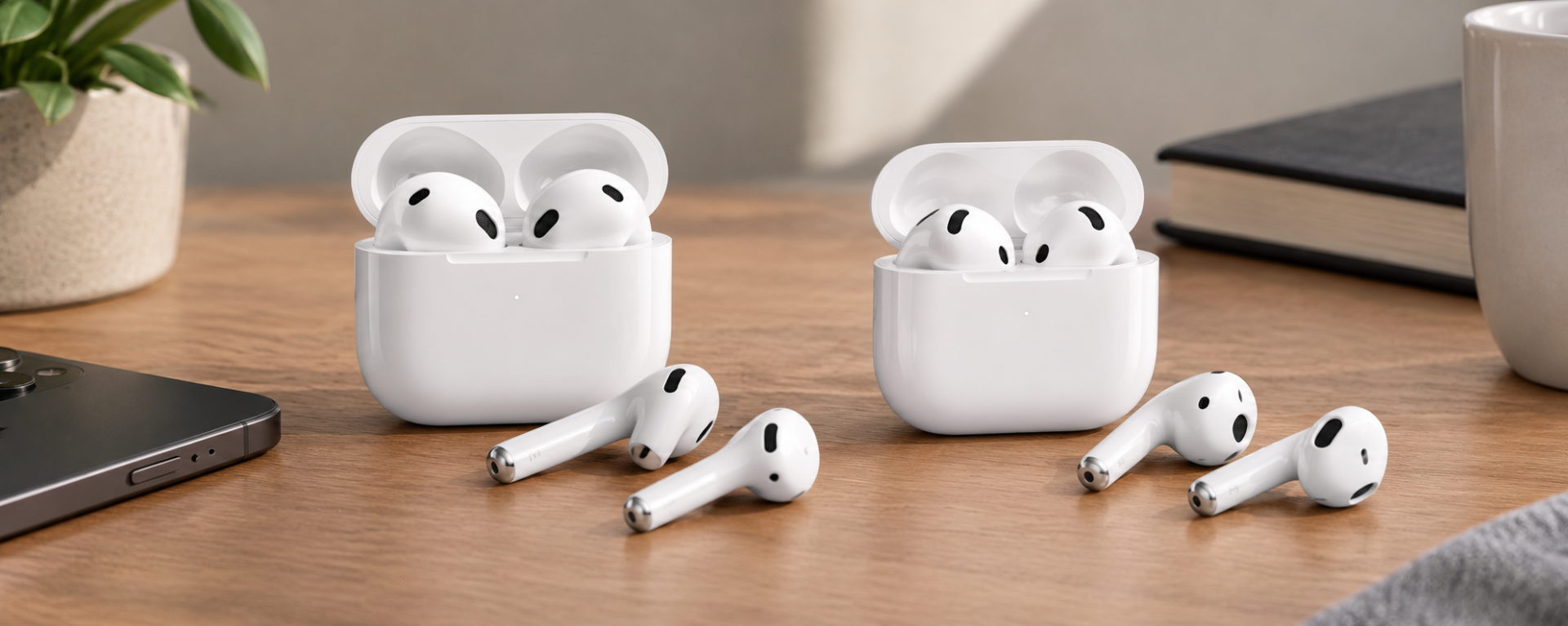
If you already own the standard AirPods 4 and want more functionality, the differences with AirPods 5 are quite clear. Active Noise Cancellation, Adaptive Audio, Conversation Awareness, and improved durability are particularly notable.
If you are using the AirPods 4 with ANC, the situation is different. In that case, many of these features are already familiar, so the main reasons to upgrade to AirPods 5 are the new acoustic system, improved noise cancellation, longer battery life, and higher water resistance.
The choice also depends on which features you actually use. If you mainly listen to music in quiet environments, some of the new features may not make a major difference in everyday use. However, if you frequently use your earbuds while commuting, at work, during calls, or in different environments, several of the new generation’s improvements may be more noticeable.
Apple’s 2026 new products are available at AllSell with competitive prices and warranty.
Last news
-
 06.10.2025
AllSell
Comparison of all PS5 models
06.10.2025
AllSell
Comparison of all PS5 models
Are you a fan of digital games, want to buy a Playstation, but aren't sure which model to choose? Read this guide
-
 01.12.2025
AllSell
Dyson AirWrap HS09: A scientific approach to hair care
01.12.2025
AllSell
Dyson AirWrap HS09: A scientific approach to hair care
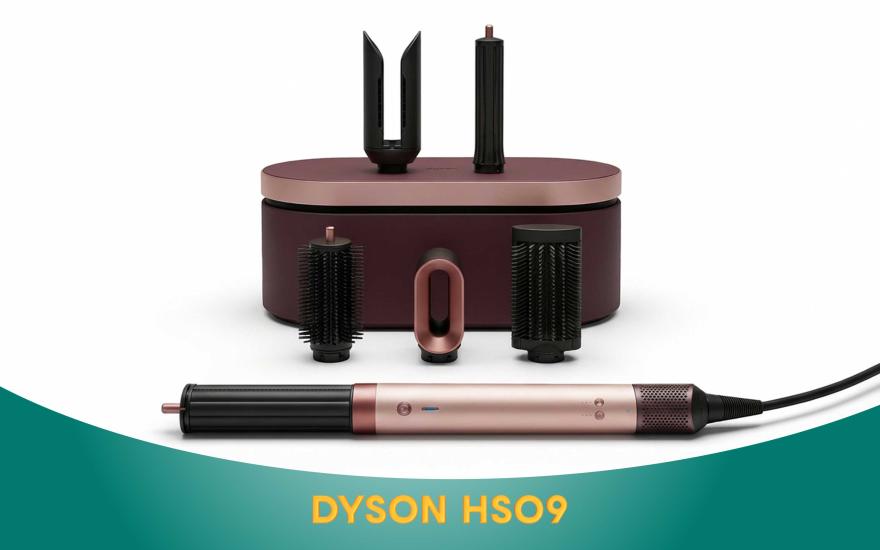
When you buy the Dyson Airwrap HS09, you get a hair dryer, straightener, and styler all in one. This is not only a three-in-one hair dryer, but also personalized care technology. Details on the blog
-
 26.11.2025
AllSell
AirPods generations and their differences
26.11.2025
AllSell
AirPods generations and their differences
There are different models of AirPods headphones and it can be difficult to make a choice if you don't know their differences. In this article, we will present all generations of Apple wireless headphones, their differences, so that you can choose the option that suits you best.
-
 29.10.2025
AllSell
DJI Mic 3 microphone features
29.10.2025
AllSell
DJI Mic 3 microphone features
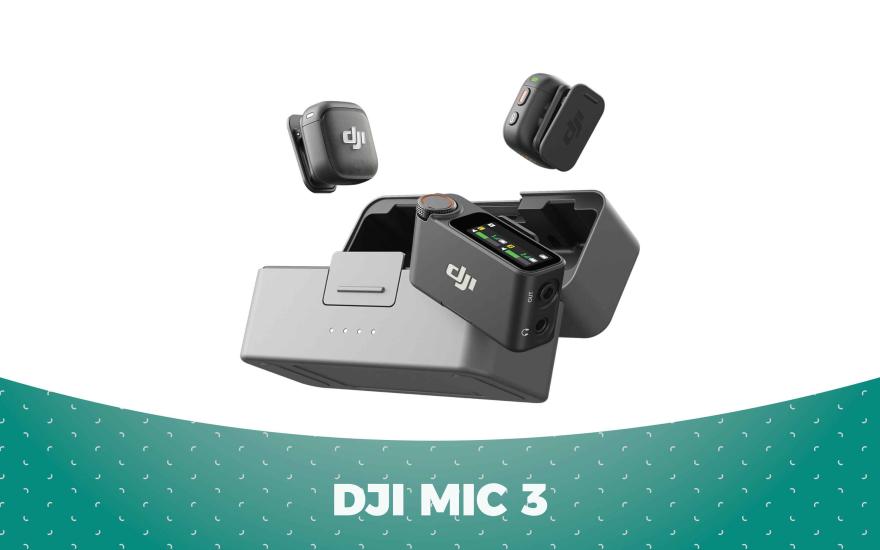
How to use DJI MIC 3 to ensure the best sound quality. Discover the microphone's features
-
 16.10.2025
AllSell
Instax Mini 12: The magic of instant printing
16.10.2025
AllSell
Instax Mini 12: The magic of instant printing
The Instax Mini 12 camera entices with its instant printing capabilities. It seems like you just press a button and that's it. However, the Mini 12 is quite finicky and has its own set of features. Read more...